Choose the relationship you actually want to pursue
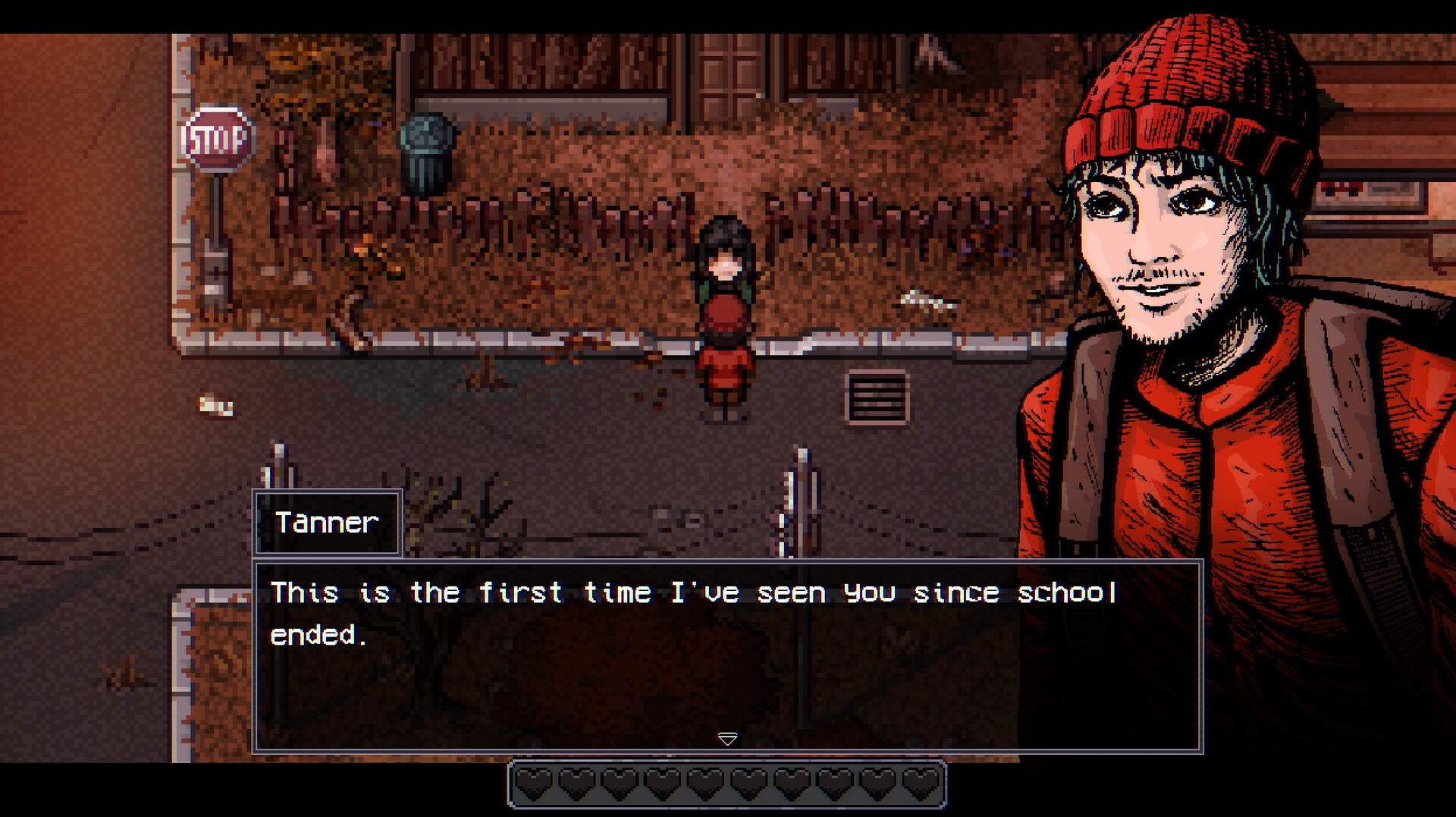
Start with the people you enjoy talking to. Welcome to Elderfield supports friendship and marriage, and its social life is easier to maintain when you have a reason to visit someone beyond filling a meter. The launch-period relationship reference covers Alice, Blorph, Celeste, Edwin, Ellie, Josh, Molly, Sam and Tanner. Other named residents can give tasks or run services without belonging to that same relationship roster. Meeting an interesting character is therefore not proof that a romance route exists.
Choose one primary social goal and leave room for incidental conversations with everyone else. You might want to see Alice's side of a school story, get to know Molly while working on equipment, or simply hear what Celeste says during your library visits. Each is a better starting point than attempting nine identical daily circuits. If you later want the all-character friendship achievement, your earlier conversations still give you a broader base. You do not have to turn the first week into a timetable designed around people whose stories you have not yet encountered.
Distinguish a conversation, a delivery and a gift
Three actions can involve talking to the same person but accomplish different things. An ordinary conversation develops the social side of the game. A task hand-in advances an objective. A gift uses the relationship gift interaction and can receive a preference-based response. When you bring someone a requested item, follow the task conversation rather than assuming that presenting it as an ordinary gift will finish the request. The name of the item alone does not tell you which interaction is required.
This matters most when the object is scarce or expensive. Before you approach a resident with the last copy of a requested meal, reread the objective and keep the intended action clear. After the conversation, check whether the task advances. If it does not, inspect the wording before making another item. A person may need a higher quality catch, a particular processed version or a previous stage's reward to be claimed. Treating those conditions as a relationship problem can send you into several days of unnecessary gifting while the actual requirement remains unchanged.
Use a resident's home as your anchor
Learn where your chosen resident lives before memorizing a schedule. The community town map helps with that first task. A fixed building is easier to recognize than a long list of possible daytime positions. Once you know the home, observe where you meet the resident on your ordinary routes. A few reliable encounters from your own save are more useful than an exact-looking timetable copied from a page with no version information.
Community character records identify Sam with Greystone Estates, Molly with the Workshop, Celeste with the Library, and Blorph with the sewers behind the Police Station. Alice and Josh share a western duplex. These are helpful starting landmarks, not promises that every person remains home all day. Use the relevant house or workplace to narrow the search, then consider time and weather. If you have already checked the likely destination once, finish another nearby errand before returning. Repeating the same empty visit does not generate new information.
Weather and events can explain an empty route
Several community schedules describe residents staying home during rain or snow. The exact affected route can vary with the character, so avoid applying one person's behavior to everyone. A rainy day that interrupts your usual meeting place may actually make a home visit easier. An event can also put residents somewhere unusual. Check the visible conditions before deciding that a missing person is inaccessible or that your task has broken.
A useful personal note has three parts: who, where and under what conditions. 'Molly at Workshop during rain' tells you more than 'Molly morning,' especially if you later compare a clear day. You do not need a spreadsheet or a website account to do this; a remembered landmark is often enough. The aim is to shorten future searches. Once you establish a route that regularly brings you to the person, stop collecting schedule details unless something changes. Friendship should make town visits more interesting, not require a second management game outside the game.
Make ordinary conversation easy to repeat
Attach a greeting to an errand you already need. Visit Molly while checking crafting requirements, stop by Celeste on a library visit, or talk to a resident when you pass through the town center. This is especially useful early, when buying rare gifts can compete with seed and equipment money. A social routine that survives a tight budget is more dependable than one built around items you cannot keep producing.
Avoid reducing every meeting to the shortest possible menu input. Read unfamiliar dialogue at least once, because Elderfield mixes personal characterization with practical leads. If a conversation gives you a name, location or request, follow that thread when convenient. Conversely, repeated familiar dialogue does not imply that you should remain in place until a new scene appears. Move on with the rest of the day, then return when the relationship, time or story conditions have changed. This balances progress with the reason to pursue the characters in the first place.
Reserve gifts for a deliberate choice
Launch-period documentation gives each relationship character a daily and weekly gift limit. The practical consequence is simple: a gift opportunity is valuable even when the item is cheap. Carry one known suitable gift for the person you expect to meet rather than a bag of random items for experimentation. If you cannot verify a preference, conversation is the safer action until you can check a trustworthy list or test a genuinely replaceable object.
A known liked item can be a sensible choice when a loved item has a more important immediate use. For example, a scarce crafting material may block your next equipment upgrade. Giving it away can cost more progress than the extra friendship is worth today. Compare the tradeoff in the context of your save. You are not trying to maximize one number in isolation; you are building a routine that lets your farm, exploration and relationships continue together. The detailed gift guide explains how to compare those choices without assuming that every attractive-looking object is welcome.
Read the letter before searching for an event
The quest reference explains that some opportunities begin through letters and that messages are delivered one at a time. A friendship threshold can therefore be met before the expected invitation appears. Check the journal at home after incoming mail rather than repeatedly travelling to the destination. If another letter is pending, resolve that information first. This is a concrete reason that an event may not begin even when the heart display appears sufficient.
When a message arrives, read its destination and the next requested action. Do not rely only on the subject line or the fact that a character sent it. An invitation may lead to a hostile area, while another letter may deliver a gift or point toward a crafting option. Prepare for the actual content. If you save and return later, reread the message before departing so you do not confuse two similar invitations. This small habit prevents the common loop of visiting the right building before the game has registered that you received the required information.
A school invitation is an adventure, not a quick chat
The relationship guide describes shared adventures at Elderfield High rather than a separate series of identical two-heart, four-heart and six-heart scenes for every person. Josh's adventure involves Josh, Sam and Alice. The launch-period walkthrough says that sufficient friendship with any member of that group can qualify the invitation. This means you can continue pursuing the person you care about without assuming you must raise all three equally before the story can begin.
Prepare for combat when following a school invitation. Bring recovery items and equipment that already work for your current level of exploration. Do not spend every available resource on gifts and then arrive unable to handle the associated adventure. The social objective and the fighting requirement are separate parts of the same outing. If you mainly want the character story, an appropriate difficulty setting can help align the experience with that preference. The official game offers a cozier difficulty option; choosing it does not make the relationships less meaningful.
If you care who speaks at the end, avoid accidental ties
Josh's school walkthrough reports that the closing conversation compares friendship among Josh, Sam and Alice. Equal-looking heart displays can hide small differences, and exact ties have a priority order. For a player who wants Alice's closing conversation, the useful conclusion is to maintain a clear lead with Alice rather than assuming a visible tie will favor her. For someone who simply wants to finish the adventure, there is no need to optimize the comparison: the listed completion reward is the same.
This is a story preference, not a reason to avoid every conversation with the other two characters. You can decide how much effort the preferred ending is worth. If you discover the condition only after completing the adventure, do not assume you ruined the entire save or marriage route. The marriage reference treats proposing as separate from school progression. Follow the relationship that interests you from where you are now. A single alternate closing scene is narrower than the sweeping route lockouts sometimes claimed by unverified guides.
Choose between broad friendship and one focused relationship
A focused route is useful when you want a particular letter, story or marriage. Broad friendship is useful when you want to hear more of the town and gradually work toward completion goals. Neither requires giving the same rare item to everyone. Divide your available attention accordingly: visit the primary person deliberately, then greet others when they are already on your path. As your resource supply grows, expand the number of people receiving planned gifts.
Reconsider the plan after reaching a meaningful milestone. If your chosen person has reached the relationship level you wanted, you can redirect gifts toward someone else instead of continuing out of habit. If a school invitation has opened, prepare for that adventure before pushing more hearts. If you are working toward marriage, check the ring materials early enough that the final heart is not followed by a long surprise crafting detour. The useful unit of progress is the next thing you can do together, not an arbitrary daily quota of social actions.
Troubleshoot a missing social event in order
When an expected event does not appear, first confirm the character and threshold in a source that matches your version. Next check incoming letters and read the home journal. Then verify the named location and any prerequisite task. Finally consider whether the event is selected by the highest friendship within a group rather than by the person you used to qualify. This order starts with inexpensive checks and leaves speculative explanations until last.
Do not fix a missing event by dumping gifts into every relationship. Gift limits make that slow, and it can change a comparison you were trying to preserve. Likewise, do not assume that an old guide's invented birthday or seasonal festival is the missing trigger. Keep the facts narrow: what the journal says, which message arrived, where you went and what happened there. With those four details, you can usually identify the precise question that needs answering. Without them, it is easy to confuse an unread letter, a location error and an unfinished prerequisite as the same problem.
A comfortable social day
A practical day might begin with checking mail, preparing one planned gift and completing the farm work that cannot wait. On the town trip, greet your primary resident and finish any task hand-in that belongs to the same area. Visit a nearby shop if needed, then continue with your main activity. If a second resident is present, talk; if not, do not add a cross-town search unless that meeting has a clear purpose. Finish by putting unused gifts away so they are not accidentally sold during the next expedition.
This routine leaves space for the game's unexpected scenes. You still make measurable relationship progress, but you are not compelled to chase every resident across every map before doing anything else. When a letter or story gives you a specific reason to change the plan, change it. Otherwise, keep the route small enough that you can remember it after a break from the game. Elderfield's residents are easier to appreciate when your encounters feel like part of living in the town instead of a checklist you must clear before play can begin.
If your play session is short, reduce the plan further. Read the newest message, greet the person nearest your existing errand and prepare the next gift before stopping. A brief session can still advance a relationship without requiring a full day of searching. When you have more time, reserve it for a newly unlocked adventure or a conversation you want to read carefully. This separation is particularly helpful for players returning after several days away: the small routine restores your bearings, while the longer story activity waits until you can follow it without rushing through names, clues and choices.
Sources & further reading
Mechanics are compared across cited sources; older-build differences are stated in the articles.